What to Grow on a Balcony in Autumn (UK)
Hardy herbs, cut-and-come-again winter salads, overwintering crops to sow now, and when to move pots indoors - what to grow on a UK balcony through autumn.
Autumn is the balcony grower's second chance, not the end of the season. As summer tomatoes and chillies fade, cooler air and softer light suit a different crew of plants: leafy salads that bolt in July thrive in October, and hardy herbs settle in for a long, slow crop. This guide covers what to grow on a balcony in autumn across the UK, what to sow now for an early spring harvest, and when to move growing indoors under a light.
What can you actually grow on a balcony in autumn?
Autumn balcony growing splits into three jobs. First, keep your hardy herbs cropping - most of the perennial kitchen herbs shrug off a British autumn. Second, sow and harvest cool-season salads and leafy greens that actively prefer the shorter, cooler days. Third, get overwintering crops in the ground now - broad beans, garlic and onions you plant in autumn to harvest weeks earlier next year.
A balcony changes the maths in two ways. The good news: walls radiate stored heat, and being a few floors up lifts you clear of the frost pockets that settle in gardens, so a city balcony often runs a degree or two milder than ground level. The catch: container roots sit above ground in cold, moving air, so they chill far faster than roots in open soil. Wind is the real enemy up high, not cold alone. Choose tough crops, group your pots, and you can keep a balcony productive well into winter.
Which herbs survive a UK autumn outdoors?
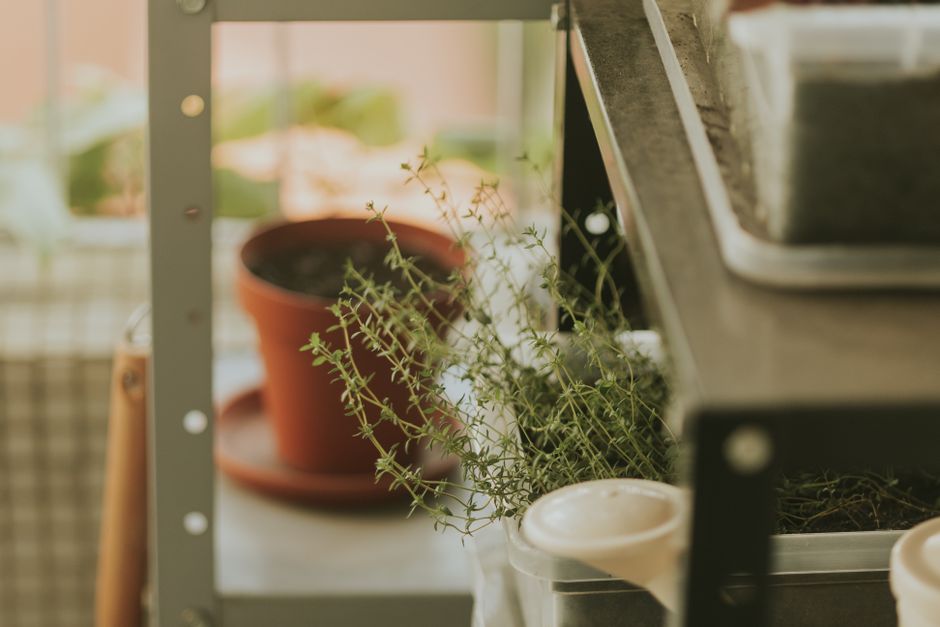
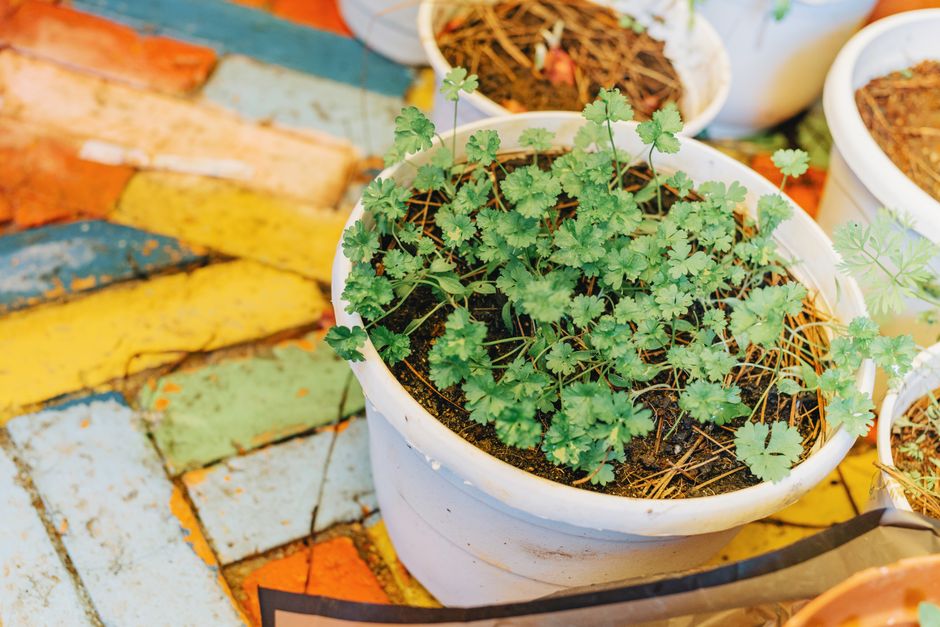
Most woody and perennial herbs are genuinely hardy and stay outside all winter. Thyme, sage, winter savory and bay keep their leaves; chives and mint die back to the compost and return in spring; rosemary stays evergreen and cropping as long as its roots never sit waterlogged. Parsley is a biennial (a plant that grows one year and flowers the next), so a plant sown in summer keeps giving leaves through a mild winter, especially under a cloche - a clear cover that traps warmth over a plant.
Cut woody herbs back lightly now rather than hard - save the heavy pruning for spring. Move pots to the most sheltered corner you have, and top the compost with a little grit or bark to insulate the roots. Coriander is the autumn surprise: sown in early September it crops for weeks in cool weather without the summer rush to bolt. The one herb that will not take it is basil - it collapses at the first cold night, so bring it indoors to a bright windowsill before the temperature drops.
What salads and leafy greens keep cropping?
Autumn is prime time for cut-and-come-again leaves (crops where you pick the outer leaves and the plant keeps regrowing from the centre). They germinate fast in warm September compost, then crop slowly through the cold. The hardiest of all is lamb's lettuce, also sold as corn salad - it survives hard frost and keeps producing mild, nutty rosettes.
Alongside it, sow winter lettuce ('Winter Density', 'Arctic King' and 'Valdor' are bred for the cold), peppery mizuna and mustard greens like 'Red Giant', land cress (a hardy stand-in for watercress), winter purslane, overwintering spinach ('Giant Winter') and Swiss chard, whose coloured stems earn their space. Sow a small pinch every two or three weeks into pots or window boxes rather than all at once, harvest the outer leaves, and a couple of containers will keep a household in salad through autumn. A cloche or a sheet of horticultural fleece (a light fabric that lifts the temperature a couple of degrees) speeds growth and keeps the leaves clean.
Can you still sow crops in autumn?
Yes - and some crops only work if you sow them now. Overwintering sowings sit through the cold and race away in spring, cropping weeks ahead of anything you plant in March. On a balcony they also keep your pots earning their keep over winter.
Sow hardy broad beans - the variety 'Aquadulce Claudia' is the classic autumn choice - in November for a May crop. Plant garlic now: cloves need a cold spell to split into a bulb, a process called vernalization, so autumn planting gives fatter heads than spring. Push in overwintering onion sets ('Radar', 'Senshyu Yellow', 'Electric') and autumn-sown hardy peas ('Meteor', 'Douce Provence'), and start spring cabbage in modules. Garlic and onions want a deep pot - at least 20cm - so the roots have room to anchor against winter wind.
How do you protect tender pots from the cold?
The first autumn frost reaches most of the UK between late October and late November, earlier in Scotland and northern hills - the Met Office keeps regional frost guidance worth checking against your postcode. Before it arrives, move anything tender - basil, tender perennials, young citrus, pelargoniums - indoors or into a mini greenhouse.
For the hardy pots that stay out, the danger is rarely the air temperature; it is frozen, waterlogged compost rotting the roots. Raise every pot onto feet or bricks so water drains freely, and wrap the pot itself - not the plant - in bubble wrap or hessian, because a container freezes solid in a way open ground never does. Cluster pots together against a warm wall so they shelter each other, throw fleece over salad crops on the coldest nights, and use a cloche to keep winter leaves cropping. Grouping by hardiness makes the nightly frost routine a two-minute job rather than a chore.
When should you move growing indoors under a light?
After the autumn equinox in late September, daylight shortens quickly. By November a UK balcony gets too little light for productive leafy growth and almost none for fruiting crops, and low-angle sun barely clears neighbouring buildings. The tell-tale signs are plants that pale and stretch, leaning and reaching toward the window - a stretching for light called etiolation.
That is the moment to move the crops you want to keep cutting indoors under a grow light. A full-spectrum LED on a windowsill keeps a pot of basil, coriander or salad leaves growing right through winter, and a countertop hydroponic smart garden takes over entirely when the balcony goes dark. If you are new to artificial light, our guide to grow light spectrum explained simply covers what 'full spectrum' actually means and how close to hang the light. Autumn is the natural handover from balcony to windowsill - plan it before the clocks change, not after your herbs have already collapsed.
Autumn balcony care: watering, wind and feeding
Three habits change as the season turns. Water less. Growth slows and evaporation drops, so pots stay wet for days - cold, sodden compost is what kills overwintering crops, not the frost. Water in the morning so the roots are not sitting soaked overnight, and let the top of the compost dry between waterings. Our balcony watering guide covers dialling back an automatic system for the cooler months.
Break the wind. On an exposed balcony, autumn gales scorch leaves and topple tall pots faster than any frost. Move containers into a sheltered corner, add a screen or trellis as a windbreak, and stand top-heavy pots on the floor rather than a railing. Stop feeding. Most crops need no feed now - late nitrogen forces soft growth that frost destroys - so put the fertiliser away until spring. Finally, sweep up fallen leaves that collect on the compost, where they harbour slugs and rot.
What should you do each month?
September: sow and settle in
The busiest sowing month. Scatter winter lettuce, lamb's lettuce, mizuna, mustard and land cress into pots while the compost is still warm, and sow a last pot of coriander for cool-weather leaves. Take basil and any tender herbs to a bright windowsill before the nights turn. Give woody herbs a light trim, not a hard prune.
October: plant and protect
Plant garlic cloves and overwintering onion sets in deep pots, and start spring cabbage in modules. Move tender pots into a mini greenhouse or indoors as the first frosts approach. Cut watering right back, raise every pot onto feet for drainage, and cluster containers against a sheltered wall.
November: sow beans and go indoors
Sow hardy broad beans such as 'Aquadulce Claudia' for a May crop. Wrap the pots of anything staying outside in bubble wrap, throw fleece over salad leaves on frosty nights, and set up a grow light indoors so herbs and cutting salads keep growing once the balcony loses its light.
Frequently asked questions
What is the easiest thing to grow on a balcony in autumn?
When is the first frost in the UK?
Can I grow herbs on a balcony over winter?
Is it too late to plant garlic in October?
Do winter salad leaves need a greenhouse?
What to Grow on a North-Facing Balcony
Grow Light Spectrum Explained Simply
Do You Need a Mini Greenhouse for a Small Patio?
Smart Watering for a Balcony While You're Away