Smart Watering for a Balcony While You're on Holiday
How to keep balcony pots alive while you are away: self-watering options, solar drip kits and simple tricks that work without a tap or timer socket.
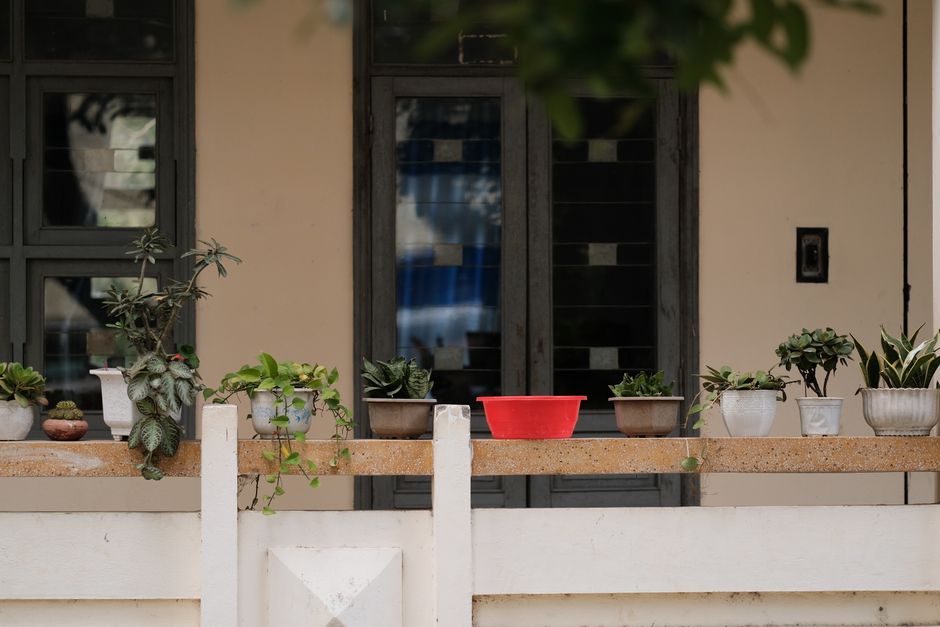
Balconies are the hardest place to automate watering because they usually have no outdoor tap and no weatherproof socket. The good news is that drip irrigation scaled down to pot size solves it neatly, and for shorter trips a few low-tech tricks will keep herbs and salads alive without any kit at all.
What is the best way to water a balcony while on holiday?
For anything longer than a few days, a self-contained solar drip system is the most reliable answer. A unit like the Gardena AquaBloom carries its own pump, timer and solar panel, sits a bucket or trug of water on the balcony as its reservoir, and drips a measured amount to each pot on a set schedule. Because it needs no tap and no mains power, it works on almost any balcony, and it doubles as everyday automation when you are home.
How long can pots survive without watering?
It depends on pot size, plant and weather, but as a rough guide small pots of herbs in summer sun may dry out in a day or two, while large containers in shade can last five to seven days. Terracotta dries faster than plastic or glazed pots. The single most effective free trick is to water deeply just before you leave and move everything into the shadiest corner, which slows evaporation dramatically.
Do self-watering planters work?
Yes, within limits. Self-watering planters hold a reservoir in the base that wicks up moisture as the compost dries, and they can keep a plant going for one to two weeks depending on reservoir size and the weather. They suit thirsty leafy crops well. For a whole balcony of separate small pots, though, a drip system that feeds each pot is more dependable than swapping everything into self-watering containers.
Cheap DIY tricks for a short trip
For a weekend or a few days, low-tech methods are enough:
- Water deeply, then group pots together in the shade to raise humidity and cut evaporation
- Sit pots in a shallow tray of water so they wick moisture up from below
- Use an inverted water-filled bottle with a spike, or a cotton wick from a water bottle into the compost, to trickle-feed a pot
- Mulch the surface of each pot with gravel or bark to slow drying