Comparison · 3 picks
Best Hydroponic System for Beginners UK: 3 Indoor Gardens
Affiliate disclosure: we may earn a commission when you buy through links on this page, at no extra cost to you. Our verdicts are our own and are not influenced by compensation. As an Amazon Associate I earn from qualifying purchases.
A first hydroponic system or indoor garden should do three things: germinate reliably, forgive mistakes, and not become an expensive habit. Those priorities pull in different directions - the most foolproof systems tend to be the most expensive to run - so the best beginner pick depends on how much you value a hands-off routine over long-term economy.
The three gardens below are ranked with a nervous first-timer in mind, drawing on manufacturer specs, UK listings and independent long-term reviews. Linked prices update automatically so the current figure is always shown.
At a glance
All 3 options side by side.
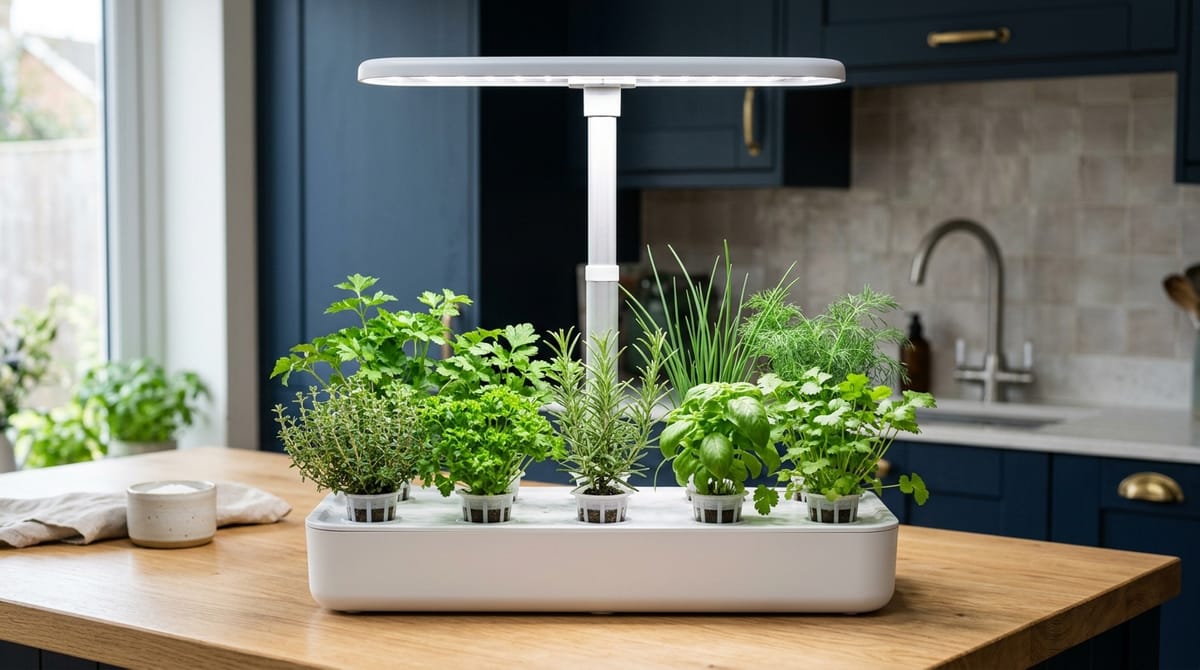 | 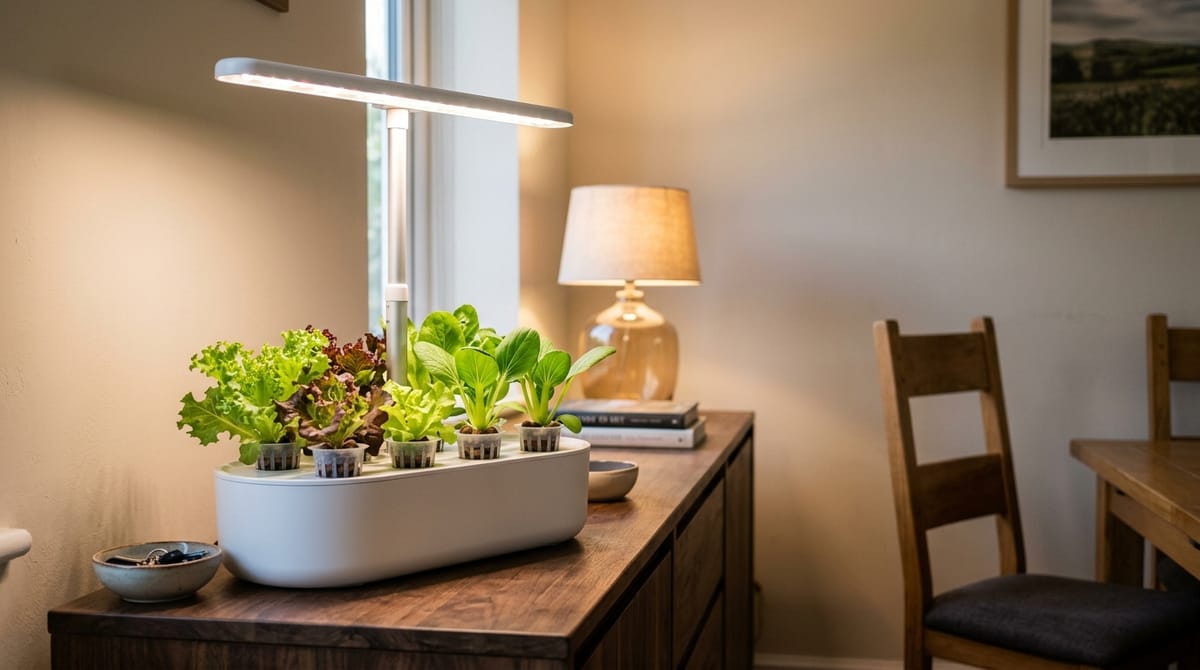 | 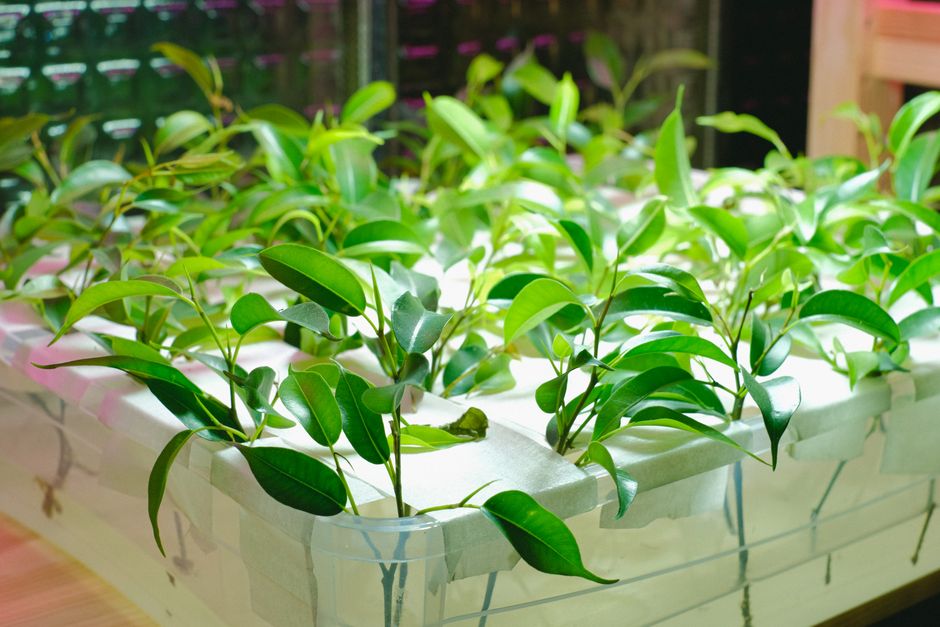 iDOO 12-Pod iDOO 12-Pod | |
|---|---|---|---|
| Price | See price | See price | See price |
| Best for | The easiest to succeed with. | The best-built step up. | The value champion. |
| Review | Read review → | Read review → | Read review → |
| Buy |
The picks in detail
Click and Grow Click & Grow Smart Garden 9
Bottom line. The easiest to succeed with. Soil pods carry their own nutrients, so there is nothing to measure or adjust. Best for a nervous beginner who wants fresh herbs with no learning curve, as long as you accept the ongoing pod cost.
Pros
- Very low-effort growing - insert pods, fill the tank, plug in
- Low power draw for a 9-pod unit (13 W LED, about 6.2 kWh a month)
- Large 4 L tank stretches refills to roughly 3 weeks in early growth
- Smart Soil pods release nutrients themselves, so there is no nutrient dosing or pH management
- Germination guarantee on official pods, with reviewers reporting responsive replacements
- Clean design that works in a living space, with a companion app for care prompts
Cons
- Closed ecosystem - ongoing spend on proprietary pods is the real running cost, not electricity
- 'Grow Anything' own-seed pods still mean buying the branded pod hardware
- Yields are kitchen-garnish scale, not meaningful food production
- Plant height is limited by the light arm
- The 16-hour light is bright enough that some owners switch it off in shared living spaces in the evening
LetPot LPH-SE
Bottom line. The best-built step up. Sturdier than most, quiet, and tall enough for tomatoes, running on cheap generic consumables. The app can be flaky, but the hardware is the pick for a beginner who wants room to grow into fruiting crops.
Pros
- Very tall 76 cm light arm gives fruiting plants room that most countertop rivals lack
- Pump rated under 20 dB - reviewers describe operation as effectively silent
- App scheduling plus on-device touch controls, so the app is optional for basics
- Stainless-trimmed build feels a clear step up from budget all-plastic units
- Open consumables: generic sponges and standard A/B liquid nutrients keep running costs low
- Strong tested growth on herbs and salad greens with a full starter kit in the box
Cons
- App and WiFi are the weak point - testing found disconnections and scheduling glitches
- One tested unit's light failed to switch on automatically, needing manual intervention
- 12-pod deck shares one tank and one spectrum, so mixed plantings compromise
- Mains-dependent automation - schedules and pump stop in an outage
- Newer brand with a shorter UK track record than the household names
iDOO 12-Pod
Bottom line. The value champion. The cheapest credible way into countertop hydroponics, with twelve pods and open consumables. Budget build and a thin light spread are the trade-offs, but nothing here costs less to run.
Pros
- Runs on generic consumables - blank sponges, ordinary seed packets and any hydroponic nutrient - so ongoing costs stay low
- 12 pods gives more simultaneous plants than most similarly sized rivals
- Built-in fan aids pollination and airflow, something several competitors omit
- Simple set-and-forget 16/8 light timer with separate veg and flower/fruit spectra
- Overnight quiet mode idles the pump and fan for bedrooms and studios
- Visual water window makes topping up obvious
Cons
- Light spreads thin across the wide 12-pod deck - side-by-side testing found herbs go leggy over longer grows
- Roughly 28 cm of headroom becomes restrictive as plants mature
- Budget plastic build with noticeable flex; testers report pump failures and LED fade emerging around the one-year mark
- Tank-circulation design gives weaker root aeration at the tank edges than per-pod delivery systems
- No app or WiFi on the standard model - scheduling is manual button presses (a separate WiFi variant exists)
How to choose your first indoor garden or hydroponic system
Decide first between a pod system and an open one. Pod gardens like the Click & Grow are the most foolproof because the nutrients come built in, but they lock you into buying pods. Open hydroponic gardens like the iDOO and LetPot are cheaper to run and let you grow anything from seed, at the cost of a little more involvement. If you are truly unsure you will stick with it, the low up-front and running cost of the iDOO makes it a low-risk way to find out.
Then match the garden to your space and ambitions. If you only want herbs and salad on a worktop, any of these will do. If you hope to grow tomatoes or peppers indoors, prioritise headroom and light reach, where the taller LetPot has a clear edge over the compact units.